

The Short Answer
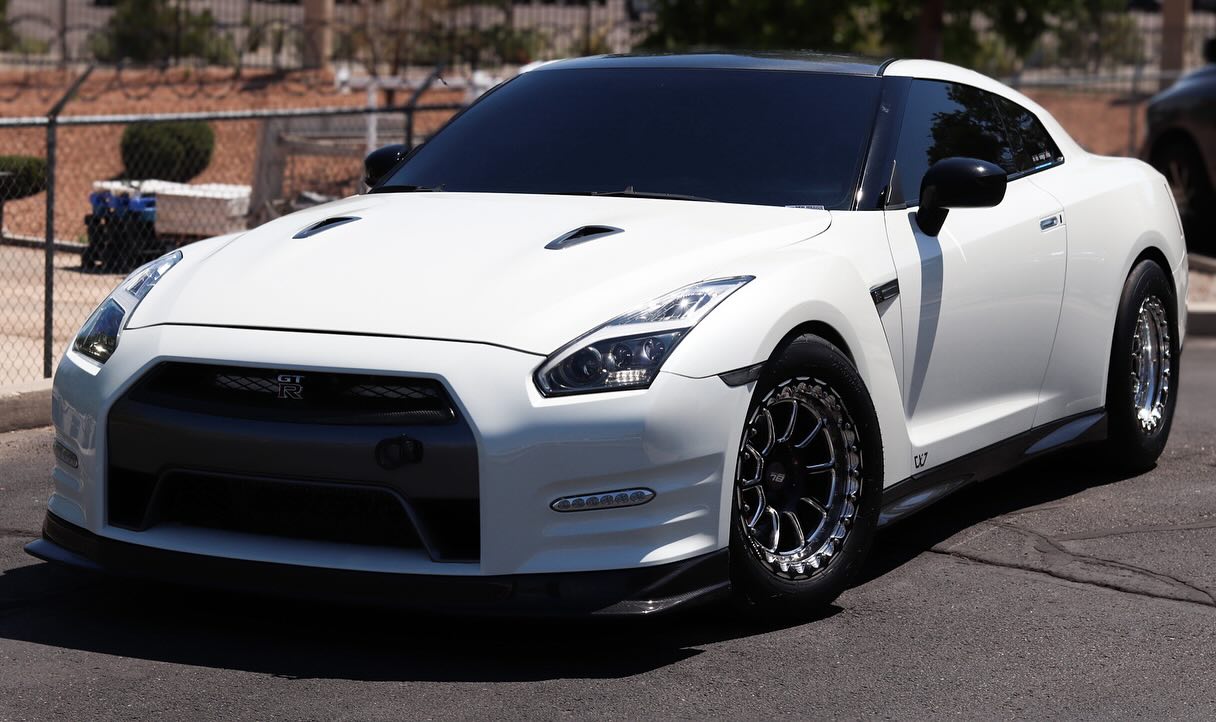
Pick the shade for how dark you want the glass to look, how much privacy you want and how well you need to see at night. Then pick the film type for heat. In New Mexico, tint on the front side windows, rear side windows and back glass has to be nonreflective and let through at least 20% of light, so a 5% film is too dark for those windows on a typical passenger car unless an exception applies. A lighter legal shade can still cut a lot of heat if the film is built for it.
What the Percentage Actually Means
The number on a shade, 5%, 20%, 35%, 50% or 70%, is a visible light transmission (VLT) figure. It tells you how much visible light the film lets through. A lower number is a darker window. A 20% film lets through about a fifth of the visible light that hits it. A 70% film lets through most of it, so the glass still looks close to factory.
That number describes the film, not the finished window. Factory glass already filters some light, so film and glass together are darker than the film on its own. New Mexico’s statute attaches its 20% figure to the tint material and does not spell out how factory glass is counted. The cautious approach, which we walk through in our article on New Mexico window tint law, is to choose a shade that keeps the finished window, film plus glass, at 20% or lighter, and to ask the installer to meter it on the car.
New Mexico’s Legal Floor
Under NMSA 1978 § 66-3-846.1, last amended in 2018 and checked in November 2026, film on the side windows and back glass must be nonreflective and have a light transmission of at least 20%. Windshield tint is limited to a nonreflective strip along the top, no lower than the ASI line or five inches from the top, whichever is closer to the top, and it can’t be red, yellow or amber. Film on the side and rear windows is only allowed on a vehicle that has both a left and a right outside rearview mirror.
A few exceptions exist, including a medical affidavit from a physician or optometrist licensed in New Mexico, and a lift of the 20% light-transmission rule for windows behind the driver on certain vehicle types. The statute does not define “multipurpose passenger vehicle,” so don’t assume an SUV, van or pickup qualifies without checking how your vehicle is classified. This is a plain-English summary, not legal advice. For the window-by-window detail, labels and exemptions, use the full statute explainer.
The Shades on Innovative Wraps’ Chart
Innovative Wraps’ window tint page lists five shades: 5%, 20%, 35%, 50% and 70%. Those percentages describe how dark the film looks. They are not a ranking of how much heat each shade keeps out.
| Shade | How it typically looks and drives | Legal note in New Mexico |
|---|---|---|
| 70% and 50% | Light tint. The car keeps a closer-to-factory look, and night visibility stays relatively easy. | Well above the 20% floor, which leaves more room once factory glass is included. |
| 35% | Clearly tinted from outside, with a milder privacy effect than 20%. Many drivers find night driving more comfortable than with a limit shade. | Legal on regulated windows as film, with more headroom than 20% after factory glass. |
| 20% | A dark privacy shade. Backing out of an unlit driveway often means relying more on cameras and mirrors. | The legal floor for the film on side windows and back glass of a typical passenger car. It sits on the line before factory glass is taken into account. |
| 5% | Very dark. Night visibility through that glass is poor. | Below the 20% floor for regulated side and rear windows on a typical passenger car, unless an exception applies. |
You do not have to run the same shade all the way around the car. A common approach is a lighter film on the front side windows, where you need to see at night, and a darker legal shade behind the driver for privacy. That is a practical starting point, not a rule. The film still has to meet the law on each window.
Darker Tint Is Not Automatically Cooler
Visible light is only part of what the sun delivers. A large share of the heat you feel arrives as infrared, which you cannot see. A dark dyed film can block the view and still let a lot of that energy through. Film construction, not darkness alone, is what changes how much total solar energy the glass rejects.
The figure to compare is total solar energy rejected (TSER), at the same VLT and test conditions. An “IR rejection” number is not defined by a standard test method in the same way and can look much higher than the same film’s TSER.
A published example from XPEL’s PRIME USA specification sheet (Rev 05/23) shows the pattern. On 1/8-inch (3 mm) glass, using EN 410, XPEL lists PRIME XR PLUS 70 at 67% VLT and 52% TSER, and PRIME CS Black 35 at 34% VLT and 36% TSER. In that comparison, the lighter film in the higher-performing line rejects more total solar energy than the darker film in the lower-performing line. Those are XPEL’s figures for its own products, with a stated tolerance of plus or minus 3%. They are not Innovative Wraps’ films, and they are not a promise of cabin temperature. The takeaway is to ask for TSER, not to assume a lower percentage keeps the car cooler.
Innovative Wraps installs ceramic window films. For the differences between ceramic and regular film, see ceramic tint vs. regular tint. Choose the shade for look, privacy and night driving. Choose the film type for heat. Tint also cannot make a parked car cold on its own. Heat still comes through the roof, the body and the glass, and a weak air conditioner will still struggle.
A Practical Way to Choose
- Stay legal on each window. Start with New Mexico’s 20% floor on the side windows and back glass of a typical passenger car, and treat 5% as off-limits there unless a stated exception applies.
- Decide how much darkness you actually want to live with at night, especially on the front side windows.
- Consider a lighter shade up front and a darker legal shade in the rear if you want privacy without giving up as much forward and mirror visibility.
- Ask about film type and TSER, not just the percentage, if heat is a main reason you’re tinting.
- Look at real film on your own glass. A sample on a board looks different than it will on your windows, and different again after dark.
Innovative Wraps’ tint process starts with a free estimate, where the shop helps you select a film and explains the work before the windows are cleaned, prepped and filmed. Bring the vehicle if you can, so you can see the shades on your glass before you commit.
FAQ
Is 20% tint legal in New Mexico?
On a typical passenger car, 20% is the legal floor for the film on the front side windows, rear side windows and back glass, provided the film is nonreflective and the vehicle has both outside rearview mirrors. Because factory glass also filters light, ask the installer to meter the finished window and confirm the shade they will put on those openings.
Can I get 5% tint on the back of my SUV?
Only if an exception applies. The 20% light-transmission rule does not apply to windows behind the driver on truck tractors, buses, recreational vehicles, multipurpose passenger vehicles or motor homes, but the film still has to be nonreflective, and the statute does not define “multipurpose passenger vehicle.” Don’t assume your SUV, van or pickup qualifies. Read the exceptions in the tint law article and ask the installer how your vehicle is classified.
Does a 70% shade still help with heat?
It can, if the film is built to reject solar energy. Shade controls how dark the glass looks. Heat rejection depends on the film’s construction. Ask for TSER at that VLT rather than assuming you have to go dark to stay cooler.
How long after tinting before I can roll the windows down?
Innovative Wraps says to wait 2-5 days so the film can fully adhere before you roll the windows.
Get Help Choosing a Shade
If you want help matching a legal shade to your car, request a window tint estimate in Albuquerque. Say how you use the car, how much privacy you want and whether night driving matters, and look at the film on your own glass before it’s installed.